How to Keep Your Pool Crystal Clear All Year Round
What makes a pool look instantly inviting? Crystal clear water. Studies show that more than 65 percent of homeowners associate clean water with a safer and more enjoyable swimming experience, which is why clarity matters as much as design or construction quality.
The challenge is that water can turn cloudy faster than most people expect, especially during busy seasons or after heavy use. If this feels familiar, you are not alone. Many pool owners struggle with balance, filtration, and routine care.
This guide explains simple actions that keep your pool clear all year, even if you are new to maintenance.
Why Pool Water Turns Cloudy
Even the cleanest pool can go cloudy overnight. Understanding the causes helps you fix them faster and prevents long term issues that may later require professional swimming pool repair or remodeling services.
Here are the most common culprits:
Unbalanced water chemistry: When pH, chlorine, or alkalinity levels drift, bacteria and minerals build up. This is one of the main reasons homeowners call for help after installing a new pool design.
Poor filtration: Dirty or clogged filters can’t trap fine debris, leaving particles suspended in the water.
Insufficient circulation: Stagnant water lets algae multiply and chemicals settle unevenly.
Organic debris: Leaves, sunscreen, and body oils feed bacteria and cloud the water.
Weather conditions: Rain, heat, and pollen all impact clarity and chemical balance, especially during the high use months that follow pool construction.
Once you know what is causing cloudy water, the solution becomes much simpler.
Step 1: Maintain Perfect Water Balance
Clear water starts with balanced chemistry. If your levels slip out of range, even the strongest system will struggle to keep the water clean. Good balance protects your plaster, tile, and equipment, which helps reduce long term issues that often lead to swimming pool repair or resurfacing work.
Key Levels to Monitor
| Parameter | Ideal Range | Purpose |
|---|---|---|
| pH | 7.2 to 7.6 | Keeps water comfortable and prevents scaling or corrosion |
| Free Chlorine | 1 to 3 ppm | Sanitizes water and kills bacteria |
| Alkalinity | 80 to 120 ppm | Stabilizes pH and reduces sudden fluctuations |
| Calcium Hardness | 200 to 400 ppm | Protects plaster and tile from erosion |
| Cyanuric Acid | 30 to 50 ppm | Shields chlorine from sunlight |
Test your water twice a week with a reliable test kit or digital reader. Make adjustments slowly because adding too much at once can throw other levels off balance. When pH and chlorine remain steady, the water stays fresh and clear, and your pool finish lasts longer. Homeowners with new pool construction often find this step most helpful during the first year.
Step 2: Run the Pump Long Enough
Water clarity depends on movement. When water becomes still, debris settles, algae forms, and chemicals stop circulating. Most pools need 8 to 12 hours of circulation per day during warm months and about 4 to 6 hours during cooler seasons.
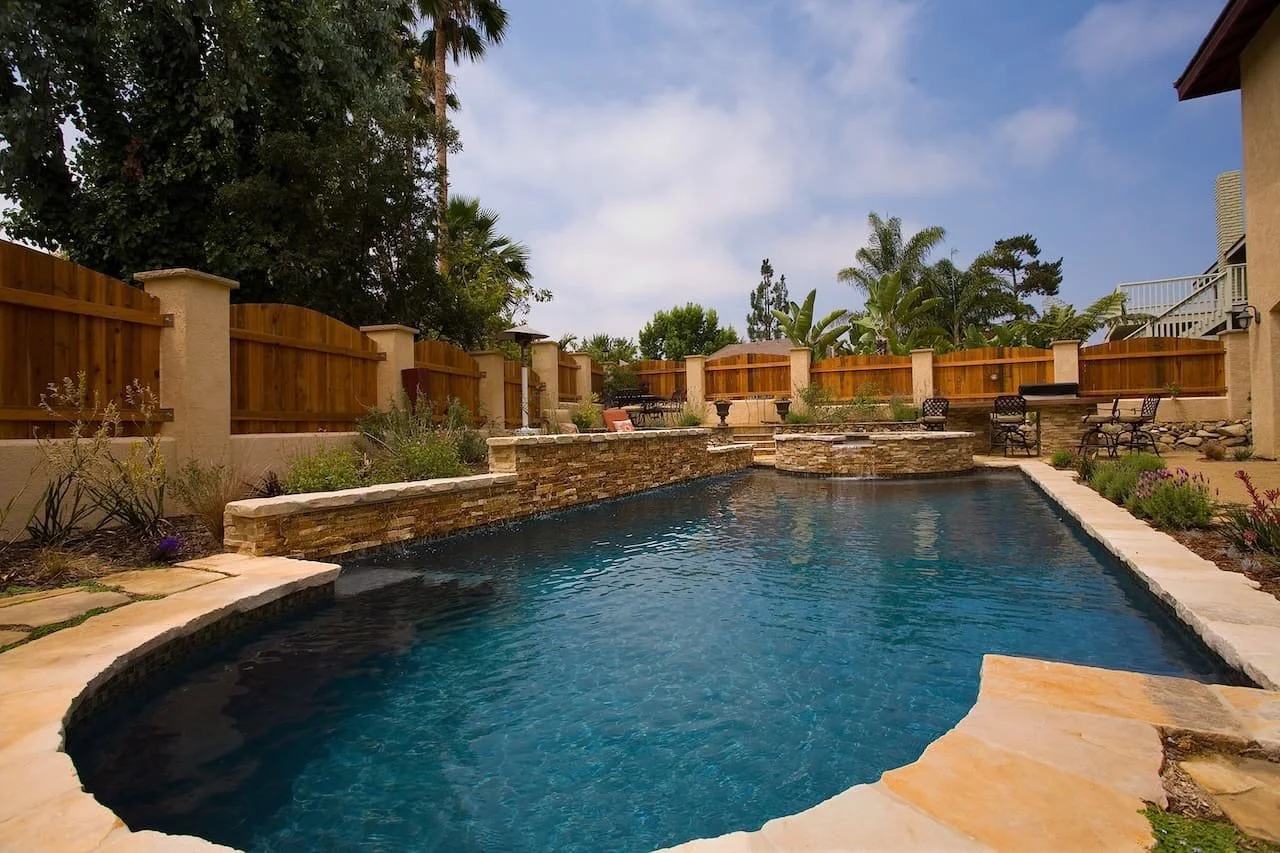
The goal is simple. You want all the water in the pool to pass through the filter at least once or twice daily. If you notice the water looking hazy, increase pump time until it clears. Good circulation helps chemicals reach steps, ledges, corners, and tanning shelves, which is important if you have a more custom pool layout similar to those shown on the luxury pool builders page.
Step 3: Keep Your Filter Clean
The filter is the workhorse of your system. If it is dirty or overloaded, fine particles will stay suspended instead of being removed. A well maintained filter keeps water visibly cleaner and reduces how often you need to shock the pool.
Quick Filter Care Tips
Check the pressure gauge weekly. A rise of 8 to 10 psi above normal means it is time to clean or backwash.
Rinse cartridge filters every few weeks and replace them annually.
For sand filters, backwash when pressure rises and replace the sand every 3 to 5 years.
If you have a DE filter, clean it and recharge it with fresh DE powder regularly.
Think of your filter like the lungs of the pool. It needs an open, unobstructed path to keep water clear and healthy.
Step 4: Brush and Vacuum Weekly
Even with good filtration, fine debris sticks to surfaces. Weekly brushing prevents algae from forming a thin layer on the walls. This is especially important for plaster pools, resurfaced finishes, and any design with benches, raised walls, or water features.
Brush walls, steps, and tile lines using a nylon or stainless steel brush depending on your surface.
Vacuum manually or use an automatic cleaner to remove dirt and sediment.
Skim the surface daily to remove leaves, insects, and twigs that can upset your chemical balance.
Consistent brushing and vacuuming stop early algae growth, which helps maintain that fresh, crystal clear look you see in high end pool design projects.
Step 5: Shock the Water
Even with proper chlorine levels, organic waste builds up from swimmers, weather, and debris. Shocking the pool removes these contaminants and restores clarity. Add a chlorine shock or non chlorine oxidizer once every one or two weeks. Do it in the evening because sunlight breaks chlorine down quickly. Run the pump overnight to circulate everything thoroughly.
Regular shocking keeps algae away, reduces odors, and keeps the water bright. Many homeowners use this step right after heavy gatherings or storms to quickly restore clarity.
Step 6: Control Algae Before It Starts
Algae grows quickly and spreads across surfaces in a short time. Preventing it is much easier than treating it. Keep algae from forming by maintaining proper chlorine levels and brushing areas where water moves slowly.
Here is how to stay ahead:
Maintain your chlorine in the correct range.
Brush shaded areas, corners, steps, and benches frequently.
Keep the water circulating every day.
Use a preventive algaecide during warmer months.
Shock the pool after storms, heatwaves, or pool parties.
If you notice a green tint or slippery surface, treat it right away. Brush thoroughly, shock the pool, and run the pump for twenty four hours. Homeowners who recently upgraded their surface using pool remodeling services often find algae prevention helps preserve the new finish.
Step 7: Manage pH and Chlorine Together
pH and chlorine work together. When pH climbs above 7.8, chlorine loses strength and cannot sanitize effectively. This creates cloudy water and increases the risk of algae. Use a pH decreaser, such as muriatic acid or sodium bisulfate, to lower pH slowly. If chlorine drops below 1 ppm, add tablets or liquid chlorine to restore sanitizing power.
Keeping both values in balance helps your chemicals work properly and keeps the water clean and clear.
Step 8: Keep the Pool Deck Clean
Dirt, mulch, sand, and grass clippings eventually end up in the pool. A clean deck protects your water and reduces cloudiness. Sweep or blow debris off the deck weekly. Trim nearby plants and trees so leaves fall less often. Avoid applying fertilizers or pesticides close to the pool because runoff can alter your chemical levels.
A tidy deck creates a cleaner environment and reduces the load on your filtration system.
Step 9: Watch Out for Rain and Heat
Weather changes often affect clarity. Rainwater dilutes chlorine, lowers pH, and can introduce contaminants. Heat increases evaporation and bacteria growth. Storms bring pollen, dust, and leaves.
After rain: Test the water and adjust levels as needed.
During heatwaves: Run the pump longer to maintain circulation.
After storms: Skim and brush quickly because organic debris feeds algae.
Staying consistent after weather changes helps keep your pool stable throughout the year.
Step 10: Maintain Equipment Health
Every part of your system contributes to water clarity. Even a small leak or weak pump can slow circulation and create cloudy water.
Check your system regularly by inspecting pump seals and O rings for cracks. Make sure suction lines stay airtight. Lubricate valves when needed. Clean out skimmer baskets daily, especially during windy seasons when debris increases.
Well maintained equipment keeps your pool running smoothly and reduces the chance of needing major repairs later.
Step 11: Use Clarifiers and Flocculants Wisely
Clarifiers and flocculants help when water looks dull or cloudy even after brushing and adjusting chemicals. A clarifier binds tiny particles together so the filter can trap them. A flocculant sinks particles to the bottom, allowing you to vacuum them out manually.
These products work well after storms, algae treatments, or periods of heavy use. They are temporary tools, not substitutes for proper maintenance, but they restore clarity quickly when needed.
Step 12: Keep Sunscreen and Oils Under Control
Sunscreen, makeup, and body lotions leave residue in the water. Over time, this can cause cloudy or foamy water. To reduce buildup, shower before swimming and use enzyme treatments to break down oils.
Clean the waterline tile weekly with a pool safe cleaner because this is where oils collect most. If the water looks greasy or develops bubbles, check chlorine levels and shock the pool to burn off organic waste.
Step 13: Use a Pool Cover
A pool cover reduces debris, protects chemicals, and slows evaporation. It is one of the simplest ways to keep your water clear. A good cover keeps leaves, dust, and pollen out and protects the water when you are away for long periods.
It also helps keep the water temperature stable. During seasons when you are not using the pool as often, keeping it covered saves time and reduces the amount of cleaning required.
Step 14: Weekly and Monthly Maintenance Schedule
A simple schedule keeps your water clear with less work. Regular care prevents small issues from turning into bigger problems that may later require swimming pool repair or professional cleaning.
Weekly Tasks
Test and adjust water chemistry.
Skim the surface, brush walls and steps, and vacuum the pool.
Empty skimmer and pump baskets and clean the filter if needed.
Shock the pool after heavy use or weather changes.
Monthly Tasks
Inspect pump and filter connections to ensure everything is tight and leak free.
Check pool lights, heaters, and automation features for proper operation.
Add a clarifier if the water starts to look slightly dull.
Deep clean the tile line and grout to prevent scale buildup.
Seasonal Tasks
Before summer: inspect equipment, check for leaks, and clean all system components.
Before winter: lower water levels slightly, balance chemicals, and cover the pool securely.
Consistency gives you the clearest water with the least effort, especially during high use months.
Troubleshooting Cloudy Pool Water
Even with good maintenance, cloudiness can appear from time to time. Use this quick reference chart to clear it fast.
| Cause | Solution |
|---|---|
| High pH | Add a pH reducer and retest in six hours |
| Low chlorine | Shock the pool and maintain proper sanitizer levels |
| Dirty filter | Backwash or clean the cartridge thoroughly |
| Algae growth | Brush surfaces, shock the water, and apply algaecide |
| Poor circulation | Increase pump runtime or adjust return jet angles |
Most cloudy pools clear within twenty four to forty eight hours once the root issue is corrected. If cloudiness continues, consider reviewing your setup or checking if your system is sized correctly for the pool, especially if it was recently updated during pool remodeling.
Extra Tips for Year-Round Crystal Clarity
These simple habits help keep water bright and clean every month of the year.
Run the pump at night if your utility rates are lower during off peak hours. This keeps circulation steady without increasing costs.
Rinse swimsuits, pool toys, and floats before putting them in the water. Oils and detergents can cause foam or dullness.
Use rainwater diverters around the deck to reduce runoff during storms.
Store chemicals in a dry, cool space because heat and moisture weaken their effectiveness.
Clean the waterline frequently since oils collect there first.
Small adjustments like these support the work your filtration and chemicals already do.
When to Call a Professional
If your pool stays cloudy or green after following all maintenance steps, it is time to bring in a professional. Persistent clarity problems can indicate deeper issues such as:
Hidden leaks or underground plumbing damage
A filtration system that is too small for the pool size
Algae embedded under plaster or in hard to reach areas
A trained technician can diagnose the cause and recommend solutions like system flushing, equipment upgrades, or partial resurfacing. If you are planning a full refresh of your backyard or want a long term fix, you can explore options such as pool remodeling or even custom luxury pool design to improve performance and longevity.
Final Thoughts
Crystal-clear pool water doesn’t happen by accident. It’s the result of small, regular habits, testing, cleaning, brushing, and keeping the system in good working order. Once you understand how to keep your pool crystal clear, the rest becomes second nature.
Think of your pool like a living system. When everything works together, chemistry, circulation, and care, you’ll enjoy water that looks and feels as good as it did the day your pool was filled.
Ready to make your pool sparkle? Follow these steps weekly, stay consistent, and your water will stay bright, fresh, and crystal clear all year round.
Frequently Asked Questions
-
The best way to keep pool water crystal clear is to maintain balanced water chemistry, run the pump long enough each day, clean or backwash the filter regularly, and brush and vacuum the pool weekly. Consistency prevents debris, algae, and bacteria from clouding the water.
-
Most pools benefit from shocking every one or two weeks. Pools that get heavy use, hot weather, or storms may need more frequent shock treatments to maintain clarity and eliminate organic waste.
-
Cloudiness can still appear when the filter is dirty, the pump is not running long enough, or circulation is weak in corners and steps. Fine particles, oils, and debris can remain suspended even with good chemistry.
-
Most cloudy pools clear within twenty four to forty eight hours once the correct issue is addressed. Running the pump longer, cleaning the filter, and rebalancing pH and chlorine usually restores clarity quickly.
-
Rainwater dilutes chlorine, lowers pH, and introduces dust, pollen, and contaminants. After rain, test the water, rebalance chemicals, run the pump longer, and skim debris to prevent cloudiness.
Ready to turn your backyard into a high-end escape?
At Portfolio Pools, we specialize in luxury custom pools for San Diego homes. Contact us for a private consultation and let’s explore luxury pool ideas customized to your property and lifestyle.

Portfolio Pools – Luxury Pool Construction & Design in San Diego
Portfolio Pools specializes in design-build projects, delivering quality, detail, & timeless appeal that San Diego residents trust. While our focus is on pool construction in San Diego, we also provide design-only services and consultations for clients outside the region, across the U.S., and internationally.